
2026-09-04 ·
Choosing Materials For Gutter Replacement In Coastal Los Angeles Areas
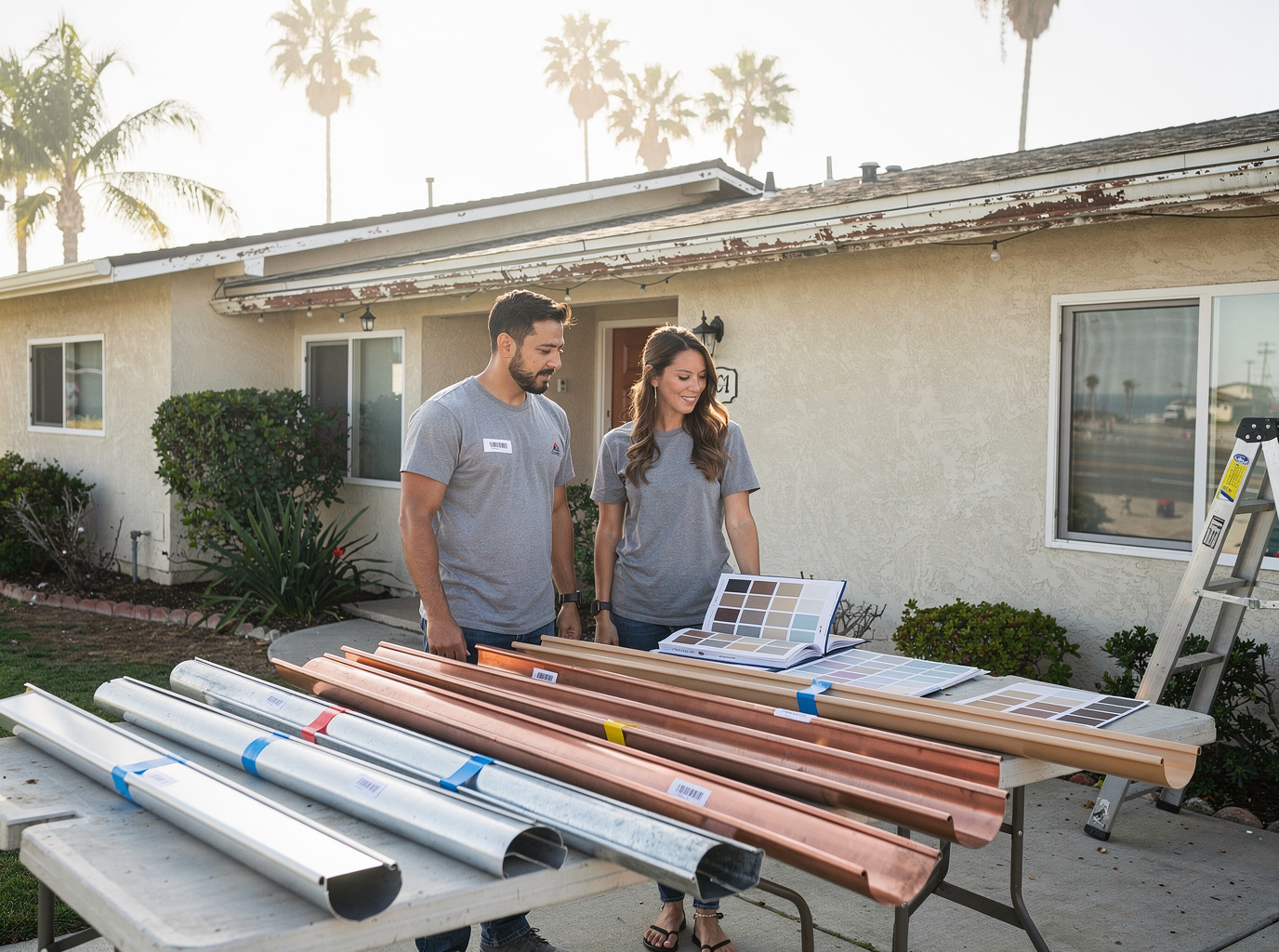
Aluminum and copper are the strongest choices for gutter replacement in coastal Los Angeles areas such as Santa Monica, Venice, and Pacific Palisades because salt air from the Pacific quickly corrodes steel and vinyl. These two materials handle the region's mild winters and warm dry summers without the pitting or seam failure common on less resistant options. Homeowners in these neighborhoods often deal with older housing stock built before modern coatings, making material selection critical to long-term performance.
Aluminum Performance in Salt Air
Aluminum gutters resist the constant salt spray that reaches homes within a few miles of the coast in Santa Monica and Venice. The metal forms a natural oxide layer that protects against pitting even when summer fog carries moisture and salts inland. In Los Angeles County coastal zones, installers typically use 0.032-inch or thicker aluminum to withstand wind-driven rain during occasional winter storms. This thickness also handles the thermal expansion that occurs when temperatures swing between 50°F nights and 75°F days. Many 1920s to 1960s homes in these areas already have fascia boards that accept aluminum K-style profiles without major carpentry changes. Proper slope and downspout placement every 20–30 feet prevents standing water that could otherwise trap salt crystals.
Copper Advantages for Long-Term Coastal Use
Copper gutters develop a protective patina that withstands decades of exposure in Pacific Palisades and similar coastal pockets. The material expands and contracts less than steel during Los Angeles temperature cycles, reducing seam stress on older roofs. Homeowners along the coast report 50–70 year service life when copper is paired with proper soldering at joints. The initial cost sits higher than aluminum, yet the lack of painting or coating maintenance offsets that over time in salt-heavy environments. Copper also matches the aesthetic of many historic homes in Venice and Santa Monica where original metalwork remains visible. Installers must use stainless steel fasteners to avoid galvanic reaction with the copper itself.
Steel and Vinyl Limitations Near the Ocean
Galvanized steel and vinyl gutters show accelerated wear within five to eight years when installed within two miles of the coast in Los Angeles. Salt deposits break down factory coatings on steel, leading to rust streaks on stucco and siding common in Westwood and Brentwood. Vinyl becomes brittle under the intense UV of dry summers and cracks at seams during the rare but intense El Niño events. Both materials require more frequent seam resealing and downspout flushing in coastal neighborhoods compared with aluminum or copper. For homes in these zones, the added labor of ongoing maintenance often exceeds the upfront savings within the first decade.
Matching Materials to Local Housing Stock and Terrain
Coastal Los Angeles homes from the 1920s through 1970s frequently feature narrow eaves and stucco walls that favor seamless aluminum or half-round copper profiles. Sloped lots in Pacific Palisades and parts of Santa Monica increase water volume at the low end of runs, requiring larger 6-inch gutters rather than standard 5-inch sizes. The Mediterranean climate means most rainfall arrives between November and March, so material choice must prioritize winter flow capacity over summer heat resistance. Linking gutter replacement to proper downspout sizing prevents overflow that can erode the sandy soils found near the coast. Readers planning work on pre-1960 homes can review What To Expect From Gutter Installation On Older Los Angeles Homes for additional framing considerations. Those comparing options should examine aluminium gutters and copper gutters specifications before final selection.